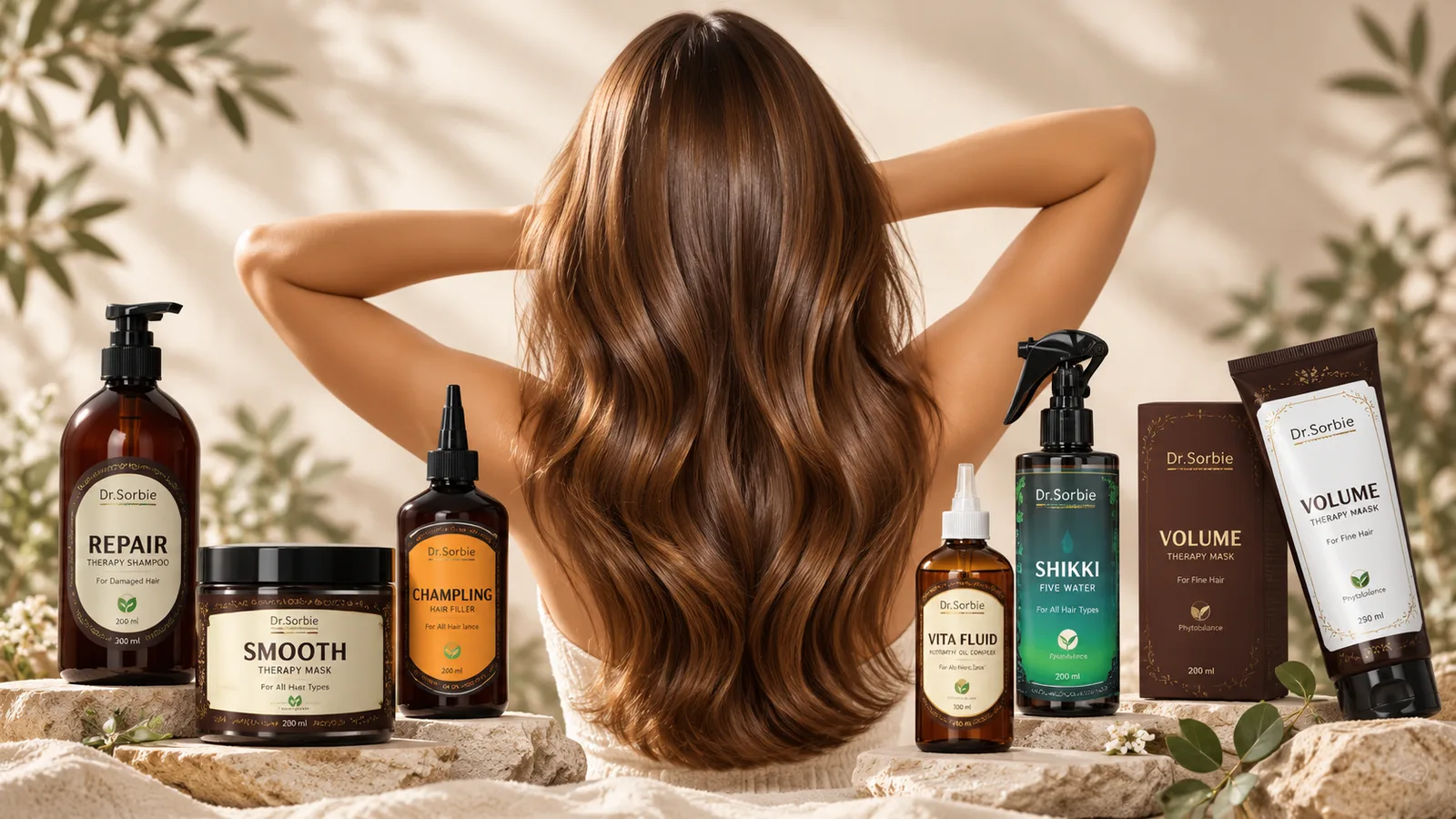
What are peptides, how do they work and what types are there? We examine GHK-Cu, BPC-157, MOTS-c, and peptides for skin, hair and anti-age care.
The word “peptides” can now be seen everywhere: in facial cosmetics, hair products, professional formulations and care products. But what are peptides in simple terms, and why do they attract so much attention?
Let us explain without complicated terminology.
What Are Peptides in Simple Terms?
Peptides are short chains of amino acids. Amino acids are structural components of proteins, while peptides can perform a variety of biological functions in the body.
There are many different peptides, and they vary in structure and properties.
For this reason, the question “which peptide is best?” is not quite the right one.
The first step is to identify the specific problem a person wants to address.
What Are Peptides Used For?
This is where most of the confusion arises.
Peptides may be found in cosmetic formulations intended for:
supporting the appearance and quality of the skin;
anti-age care;
scalp and hair care;
supporting skin repair processes.
At the same time, there are research peptides that are studied in entirely different areas.
A cosmetic peptide and a research peptide are not the same thing, and promising research does not mean that a substance is approved as a medicine.
What Types of Peptides Are There?
One of the best known in cosmetology is GHK-Cu (copper peptide).
It can be found in skin and hair products. GHK-Cu is studied in connection with tissue regeneration, skin remodelling and hair follicles.
This is why searches for “GHK-Cu for the face”, “copper peptide for hair” and “peptides for skin” are becoming increasingly popular.
Another example is BPC-157. This is an experimental peptide that is widely discussed because of research into healing and tissue repair processes. It is important to understand that it is not a standard approved medicine for treating injuries in humans.
MOTS-c is another research peptide associated with mitochondria and cellular metabolism. It is studied in the context of metabolic processes, but the existence of research does not mean proven efficacy for a specific disease or indication.
Before choosing a product, it is therefore essential to consider not only the name of the peptide but also its status, form and intended use
Peptides for Skin: Why Are They Used?
Skin gradually changes with age: it may lose firmness, become dry, develop uneven texture and show fine lines.
This is why peptides have become popular ingredients in anti-age cosmetics.
In home care formulations, they are often combined with other active ingredients, including hyaluronic acid, antioxidants and ingredients that support the skin barrier.
Peptides for Hair
Another popular area is peptide products for the hair and scalp.
However, if hair is actively falling out, cosmetics should not replace investigation of the cause.
Hair loss may be affected by deficiencies, nutrition, stress, hormonal factors, thyroid disorders and other conditions.
A good approach is:
identify the problem → undergo diagnostic assessment if needed → select suitable care.
How to Choose a Peptide Product
Do not choose a product solely because a particular peptide has become popular on social media.
Consider the ingredients, product form, method of use, manufacturer and intended purpose.
It is especially important to distinguish between cosmetic products for external use and substances sold for research purposes.
Looking for a Peptide Product?
In the Nova Vroda catalogue, you can review the available peptides, cosmetic products and complexes, as well as their composition, form and intended use.
About the author
Nova Vroda experts
nutritionist
Works with eating habits, daily routine and gradual lifestyle changes without extremes.