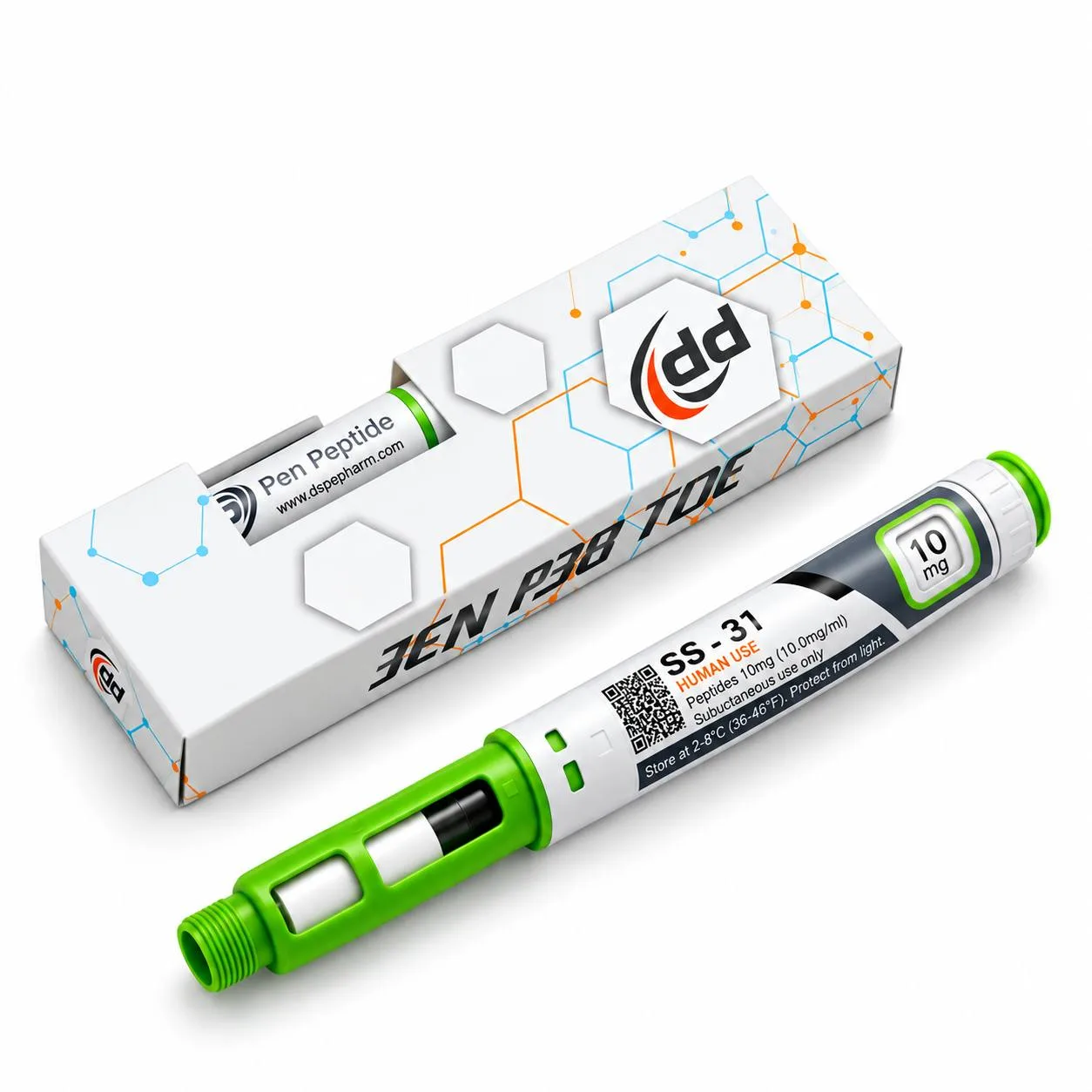
This peptide, made with D-amino acids for greater stability, has been tested in mammals, including humans. SS-31 binds strongly to mitochondrial membranes and has a number of known benefits:
It reduces oxidative stress and the formation of reactive oxygen species (ROS).
It protects mitochondria from damage and impaired function.
It helps cells use energy more efficiently.
It reduces inflammation and apoptosis in tissues.
It protects the heart during ischaemia, reperfusion and heart failure.
It protects the kidneys during acute kidney injury.
It protects the brain from oxidative stress and neuroinflammation.
It improves skeletal muscle function and reduces muscle atrophy.
It shifts the immune response from pro-inflammatory to anti-inflammatory.
It protects against fibrosis in various organs.
It helps synchronise mitochondrial dynamics to control age-related changes.
For these reasons, the SS-31 peptide has attracted the attention of researchers. Research into this peptide is extensive, making it difficult to cover every aspect. Some of the main points include how SS-31 stabilises mitochondria, reduces inflammation and fibrosis in various organs, and alters oxidative stress.
Structure of the SS-31 peptide
Amino acid sequence: HD-Arg-Dmt-Lys-Phe-NH2 (Dmt - 2,6-dimethyltyrosine) Molecular formula: C32H49N9O5 Human gene: No specific gene; synthetic peptide Synonyms: SS-31, Elamipretide, Bendavia, MTP-131, Szeto-Schiller peptide 31
Intestinal inflammation
One of the main mechanisms of action of SS-31 is the stabilisation of mitochondria in intestinal epithelial and immune cells. It reduces the production of ROS and pro-inflammatory cytokines such as TNF-α and IL-1β. SS-31 enters cells and prevents mitochondrial dysfunction, which supports anti-inflammatory responses, reduces inflammation and restores barrier function. SS-31 and similar compounds are being actively studied as potential modulators of inflammation in intestinal diseases such as IBD [1], [2].
In inflammatory bowel diseases (IBD), such as Crohn's disease and ulcerative colitis, SS-31 improves the intestinal barrier and reduces inflammation caused by oxidative stress [3]. This action promotes the formation of cells that produce the anti-inflammatory factor interleukin-10 [4]. Mitochondrial dysfunction plays a critical role in the development of IBD.
Improving the intestinal barrier is very important because it is believed to contribute to the development of IBD. When the barrier is damaged, more antigenic material enters the space between cells, where it interacts with immune cells and triggers an inflammatory response. By reducing oxidative stress, SS-31 reduces the presentation of antigens to immune cells, interrupting the early stages that lead to colitis and severe IBD [3].
SS-31 and lung function
SS-31 affects lung function in two ways. First, it regulates mitochondrial function in alveolar cells, reducing ROS levels and suppressing pro-inflammatory cytokines such as IL-6 that trigger fibrosis [5]. As in other tissues, SS-31 controls inflammation in the lungs, which has previously been difficult to achieve in models. Preventing fibrosis may prevent pulmonary fibrosis, the end stage of many inflammatory diseases such as COPD, idiopathic pulmonary fibrosis and others [6]. SS-31 may help prevent end-stage lung diseases, which often require transplantation and result in high morbidity and mortality.
Second, SS-31 stops fibroblast growth and apoptosis in lung tissue. This growth is a long-term result of lung inflammation and is particularly severe in uncontrolled COPD [7]. SS-31 may help mitigate the effects of chronic inflammation caused by fibrosis.
In addition, the antioxidant effect of SS-31, which influences cellular energy, may affect the blood vessels in the lungs. Preliminary data indicate that SS-31 improves gas exchange by reducing oxidative stress [8]. SS-31 appears to be a new treatment approach that improves lung function in primary inflammatory diseases, but further research is required.
SS-31 in transplantation
One of the main challenges in organ transplantation is immune rejection. Even when a donor and recipient are well matched, the body responds to the transplant by destroying it. Commonly used immunosuppressants address this problem, but they increase the risk of infection and cause side effects such as scarring and organ fibrosis.
Research on SS-31 indicates that it affects mitochondria in immune cells, reducing the activation of pro-inflammatory pathways and supporting regeneration. By reducing oxidative stress, SS-31 prevents early immune responses. Importantly, it primarily affects cells associated with tolerogenic signals, selectively blocking those that may cause rejection [9]. This field is being actively studied. SS-31 may reduce the risk of rejection with fewer side effects and infectious risks and may become a key component of future treatments aimed at preventing rejection.
SS-31 as a neuroprotective agent
SS-31 has a threefold role in the CNS: it acts as an antioxidant, an anti-inflammatory agent and a mitochondrial stabiliser. As in other tissues, SS-31 maintains the blood-brain barrier (BBB) in the CNS by reducing ROS levels [10]. The blood-brain barrier controls what enters the brain, regulating nutrition, oxygenation and immune function. Its disruption is observed in the development of multiple sclerosis, Alzheimer's disease and stroke.
SS-31 also regulates beta-amyloid accumulation in mouse models of Alzheimer's disease and provides a neuroprotective effect in Parkinson's disease [11], [12]. It protects the developing brain by preventing oxidative damage and improving myelination [13]. In Parkinson's disease, SS-31 shifts the immune balance from pro-inflammatory to anti-inflammatory pathways, reducing inflammation [14].
The role of SS-31 in Alzheimer's disease is less clear. Mitochondrial dysfunction is more pronounced in patients with bronchial asthma, while stabilisation reduces beta-amyloid [15], [16]. Administration of SS-31 to mice reduces beta-amyloid, supporting its importance in disease development.
SS-31 protects neurons by binding to cardiolipin, leading to increased energy consumption and secretion of neurotrophic factors that protect synapses and neurons.
Cardiac fibrosis
Fibrosis is the final stage of many heart diseases and causes valve dysfunction, reduced contractility, filling problems and electrical disturbances. As with the lungs, transplantation is often required to prevent a fatal outcome.
Most research focuses on preventing scar formation. Some products slow remodelling, but they rarely stop fibrosis completely. However, recent model data indicate that SS-31 both slows and reverses fibrosis, partly by reducing ROS levels and pro-inflammatory factors [17]. This is consistent with mitochondrial antioxidants being the first line of defence in preventing fibrosis.
SS-31 and COVID-19
Recent data indicate that SS-31 may alleviate lung problems in severe cases of COVID-19. SS-31 stops ROS formation in the mitochondria, protecting type II alveolar cells responsible for gas exchange. SS-31 may prevent excessive inflammation and fibrosis caused by SARS-CoV-2 [18].
SS-31 rapidly reduces inflammation in models of acute lung injury, even in the presence of other comorbidities. The peptide has been studied in viral infections and has shown suppression of oxidative stress.
SS-31 belongs to a group of peptides that affect mitochondria and act on the central nervous system, gastrointestinal tract, lungs and immune system. It supports cell regeneration.
Research supports the ability of SS-31 to reduce systemic inflammation, particularly in neurodegenerative diseases, pulmonary fibrosis, inflammatory bowel diseases and cardiac fibrosis. The peptide is effective in fibrotic processes, indicating its potential value in addressing fibrosis, which causes many diseases and deaths.
In addition to its antifibrotic effect, which is due to antioxidant activity, SS-31 is a strong mitochondrial protector and anti-inflammatory agent. It protects the CNS from damage and is useful for preserving cognitive function in neurodegenerative diseases.
SS-31 has shown results in clinical trials and has been rapidly evaluated for its applications. This may support the development of other treatments by providing data for future trials and encouraging pharmaceutical companies to develop products with a high likelihood of approval.
In model experiments, SS-31 has minimal side effects, low bioavailability when taken orally and good bioavailability when administered by injection. The doses used in models do not correspond to human doses.
Side effects and important warnings
When using the SS-31 peptide individual reactions may occur due to metabolic characteristics and the sensitivity of the vascular system.
Short-term increase in blood pressure
Mild general discomfort or fatigue
Minor changes in well-being at the start of use
Individual sensitivity to the peptide's components
Use:
Mitochondrial protection: Stabilises cardiolipin, preventing its oxidation and the destruction of mitochondria.
Energy metabolism: Improves the function of the electron transport chain, increasing ATP energy production
Use: Used for age-related changes, cardiovascular diseases (cardiomyopathies), age-related macular degeneration, kidney diseases and to improve muscle function.
Results: Increased energy and endurance (1-2 weeks), improved cognitive abilities (2-4 weeks) A dose of 1 mg once daily is recommended
Dosage in clicks:
*Intended exclusively for laboratory purposes and personal observation. The information has been compiled from numerous studies and analyses conducted over many years and is not intended to diagnose, treat or prevent any disease.
*All results are individual and depend on your state of health